




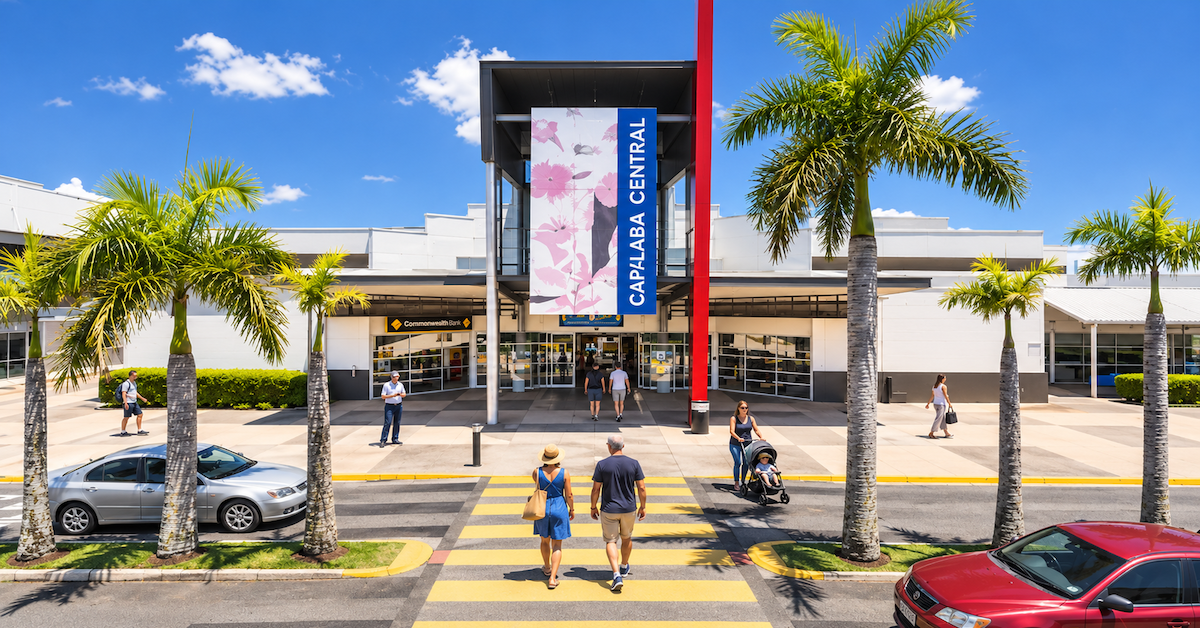
An Alexandra Hills resident once described a journey that would test anyone’s patience: a kilometre on foot to catch a bus towards Capalaba, another bus back towards the intended destination, then a major road crossing and a further 800-metre walk.
The destination was My Horizon or IndigiScapes, both local facilities. Depending on the bus connections, the trip could take more than 90 minutes.
The experience was recorded in Redland City Council’s 2018 Age Friendly Cities Survey. Although it cannot tell us what the same journey would involve today, it captures a frustration for people who rely on public transport: sometimes the hardest part of getting somewhere is everything that happens around the bus ride.
That question has fresh relevance in Capalaba, where the town centre is undergoing redevelopment and a new Redlands-wide transport strategy is placing greater emphasis on walking connections, crossings and access to everyday destinations.
A Short Distance Can Be a Long Journey
Capalaba has two major shopping centres, an established bus interchange and a concentration of shops, health services and community facilities. For residents travelling without a car, it is one of the Redlands’ important destinations.
But a trip to the shops, a medical appointment or a community activity can involve several separate challenges. A passenger must first reach a suitable bus stop, board the service, then find a practical route from where they get off to where they need to go.
For someone using a wheelchair, that may mean negotiating kerb ramps and continuous pathways. A resident with limited stamina might need somewhere to rest along the way, while a person with vision impairment may depend on clear crossing information and tactile guidance.
The concerns are not confined to people with disability. In the same 2018 survey, a Capalaba resident aged 70–74 called for affordable, personalised transport, while another respondent raised the cost of community transport and limited bus availability.
Those historical comments cannot be treated as a current assessment of services. They do, however, explain why the distance shown on a map tells only part of the story.
Capalaba’s Changing Centre
There is a practical reason to revisit the issue now.
Construction of the first stage of Capalaba’s town-centre redevelopment began in June 2026, with plans for a new library, customer service centre and community facilities. The wider development vision also includes improved pedestrian connections and public spaces.
During earlier preparations, council said pedestrian access between the bus interchange and Capalaba Central would be maintained through demolition and construction. That undertaking, made in February 2025, illustrates the importance of the route between the transport hub and one of the suburb’s main destinations.
The redevelopment is progressing in stages, however, and its wider plans should not be mistaken for completed accessibility improvements.
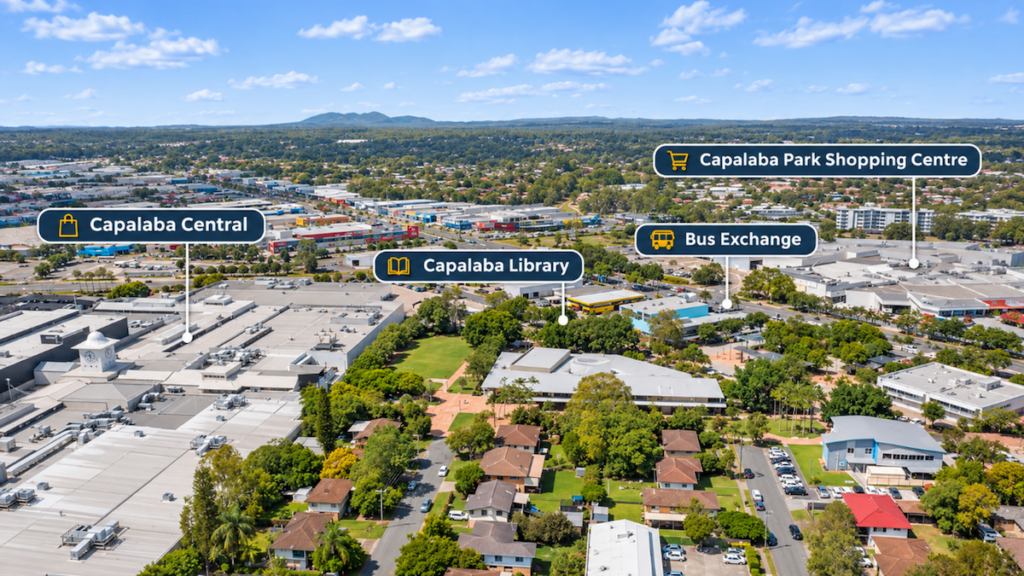
Beyond the construction precinct, Redland City Council’s Active Transport Strategy 2026–2046, released in April, identifies opportunities to strengthen walking and cycling links around transport hubs and major destinations.
It also draws attention to crossing difficulties around the Moreton Bay Road and Redland Bay Road intersection. Those concerns are recorded in the strategy, rather than arising from a new independent accessibility inspection.
The document sets priorities for future planning but does not establish funding or construction schedules for every proposed improvement.
From the Archives: A Familiar Challenge
When Capalaba’s new bus interchange was being developed in 2003, improving pedestrian connections to nearby shopping centres was already a priority.
The project, valued at more than $9 million, aimed to bring public transport closer to the heart of the town centre. Its design had received Queensland planning recognition in 2002.
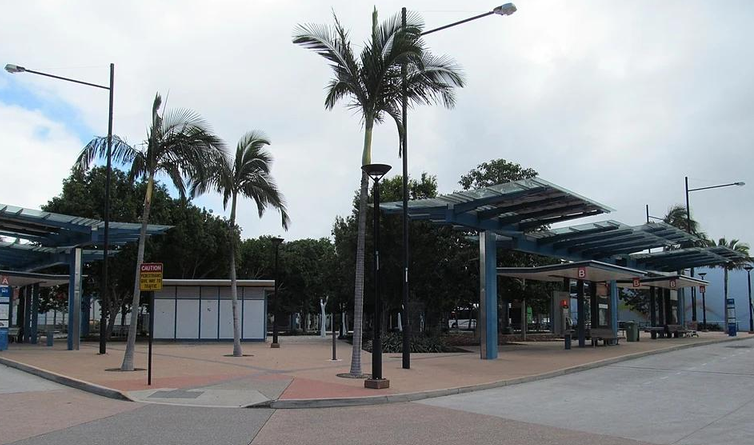
More than two decades later, the question of how easily people can move between buses, shops and services remains central to Capalaba’s planning.
Photo Credit: Orderinchaos / Wikimedia Commons, CC BY-SA 4.0. Image may have been resized.
The Freedom to Get There
Across Redland City, 5,654 people were active NDIS participants as at 30 June 2026, according to Psych Connect’s analysis of NDIA statistics.
The figure covers the entire council area, not Capalaba alone. It also cannot tell us how many participants use public transport or need mobility-related assistance. Disability experiences vary considerably, and accessible streets benefit many residents who are not NDIS participants.
What the discussion brings into focus is the importance of having choices.
A bus service may be accessible, yet the journey can still be difficult if the route to the stop or the final destination does not meet someone’s needs. Queensland’s Disability Action Plan for Passenger Transport Services 2026–2028 recognises that accessibility extends across vehicles, stops, information and the wider passenger experience.
In Capalaba, where shopping, community services and transport meet, that principle has an immediate local application.
The Next Connection
Capalaba has been considering how to bring its town centre together for decades. The 2010 Activity Centre Master Plan envisaged stronger pedestrian links between transport, shops and civic spaces, and the current redevelopment is another chapter in that longer ambition.
The 2018 survey account is a reminder that the practical details matter as much as the larger plans. A direct crossing, a continuous footpath or a better connection between services can make a substantial difference to someone’s day.
As Capalaba’s centre changes, the question is not simply how many new facilities it gains, but how easily residents can reach them.
For those who depend on public transport, the freedom to get around often comes down to the journey between the bus stop and the front door.
Understanding the NDIS Figures
About the Data
Psych Connect’s analysis of National Disability Insurance Agency (NDIA) statistics reports 5,654 active NDIS participants across Redland City as at 30 June 2026.
This figure covers the entire Redland City local government area, not Capalaba alone. It does not indicate how many participants use public transport, experience mobility difficulties or require accessible transport infrastructure. Residents outside the NDIS may also have accessibility needs.
Source: Psych Connect’s NDIA statistics analysis.
Editorial Disclaimer
This article was independently prepared by Capalaba News using separately published sources. The personal experiences described were documented in Redland City Council’s 2018 Age Friendly Cities Survey, while Psych Connect is credited solely for its analysis of NDIA statistics.
No relationship between Redland City Council, the survey participants and Psych Connect is asserted or implied by their inclusion. The personal experiences cited were not obtained through interviews conducted by Capalaba News.
The historical survey accounts do not establish current transport conditions, and the adoption of transport strategies does not confirm that individual infrastructure projects have been funded, commenced or completed.
Published 11-Nov-2026