




By Cathy Brand | Fire Safety Advocate and CEO of Brooks Australia
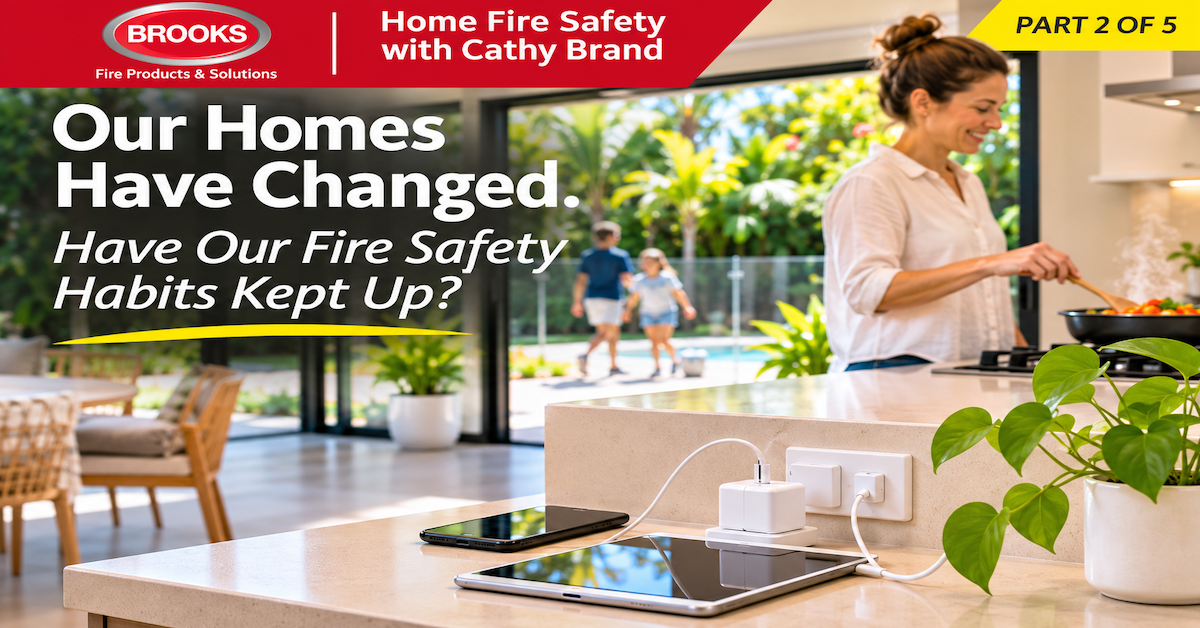
A spare bedroom becomes a home office. The garage fills with tools, sports equipment and rechargeable devices. A kitchen that once had a kettle and toaster now has several appliances competing for bench space and power points.
Homes have always evolved around the people living in them, but I wonder how often we stop to consider whether our fire safety habits have kept pace.
As Queensland heads towards summer, households are preparing for warmer days, school holidays and more time spent entertaining at home. Air conditioners, fans, kitchen appliances and rechargeable devices are all part of everyday life, often operating alongside equipment we’ve accumulated over the years.
None of these conveniences is inherently unsafe, but as our routines change, so can the risks within our homes. Fire safety needs to reflect the way we actually live, rather than becoming something we consider only when installing smoke alarms or responding to new legislation.
When Familiar Routines Create Risks
Most household fire hazards don’t announce themselves. They can develop gradually through habits we’ve followed for years without incident.
Cooking is one example. A phone call, a child needing attention or a quick trip outside can be enough to distract us from something on the stove. Unattended cooking is a preventable fire risk, and staying in the kitchen while food is cooking is one of the simplest precautions we can take.
With summer approaching, outdoor entertaining and barbecues become part of many Queensland households’ routines. Keeping barbecues clean, checking equipment before use and ensuring they’re operated safely outdoors are sensible precautions, particularly when gatherings become busy.
Our increasing reliance on electrical and rechargeable devices also deserves attention.
Lithium-ion batteries are now found in everything from phones and laptops to power tools, e-bikes and e-scooters. Electric vehicles are also becoming more common, bringing home charging into the picture. Although the risks vary considerably between products, damaged batteries, unsuitable chargers and unsafe charging arrangements can create fire hazards.
For smaller rechargeable devices, it’s worth using suitable chargers, following the manufacturer’s instructions and keeping charging equipment away from combustible materials and escape routes. A battery showing signs of swelling, damage or unusual overheating should not continue to be used or charged.
Electric vehicles have different charging requirements. Home charging equipment should be appropriate for the vehicle, with any required electrical installation work undertaken by a licensed electrician.
The point isn’t to become anxious about the technology in our homes. It’s to recognise that new conveniences sometimes call for new precautions.
What Recent House Fire Claims Reveal
RACQ Insurance reported the following figures for house fire claims received during 2024–2025.
Source: RACQ Insurance, 16 July 2026. Figures relate to RACQ Insurance claims, not all house fires in Queensland.
HOME FIRE SAFETY | BRISBANE INCIDENTS
Four Brisbane Fires, Four Reminders About Household Safety
Recent incidents show how quickly a fire can spread through an ordinary home — and why everyday precautions and early warning matter.
Bridgeman Downs | 6 November 2026
A home on Montalcino Place was extensively damaged by fire. Initial reports suggested a barbecue in the garage may have been involved, although the cause had not been conclusively established.
Ashgrove | 7 November 2026
Fire destroyed a two-storey home on Glenlyon Drive after reportedly spreading from the garage. Part of the roof collapsed. The ignition source remained unconfirmed.
Sherwood | 9 May 2026
A two-storey home was gutted in a fire that authorities believed began with a barbecue left switched on. The family was outside when the blaze broke out.
Inala | 24 June 2025
A fire reportedly started in the kitchen of a Rosemary Street share house. Ten occupants escaped, but the property was severely damaged. Firefighters reported there were no working smoke alarms.
The takeaway
Not every household fire has the same cause, and not every ignition source can be identified. Safe cooking and barbecue practices, attention to appliances and working, interconnected smoke alarms all form part of protecting a household.
The Changes We Don’t Always Notice
When people think about improving home fire safety, they sometimes imagine major electrical work or expensive renovations. In reality, many worthwhile improvements are much simpler.
A hallway that has gradually become a storage area may now be difficult to navigate in an emergency. Furniture that seemed perfectly placed a few years ago might obstruct a doorway. Boxes stored beside electrical equipment or belongings piled around power points can introduce avoidable hazards.
I encourage families to look at their homes with fresh eyes, particularly the routes they would need to use if they had to leave quickly.
It’s also worth considering how the people living there have changed.
Children grow older and become more independent. An ageing parent may move into the household. Someone recovering from surgery might temporarily have difficulty walking, while another family member may develop hearing or memory difficulties.
I often compare this with fall prevention. As someone’s mobility changes, families think about removing trip hazards, improving access or making other practical adjustments. We should be just as willing to reassess their fire safety.
A home that was suitable for everyone five years ago may need a different approach today.
An Escape Plan That Works in Real Life
One of the most important questions a household can ask is whether everyone would know what to do if a fire occurred.
Having smoke alarms is essential, but an early warning is only useful if people can recognise it and respond.
A household escape plan should identify safe ways out, establish an outdoor meeting place and be practised regularly. Where possible, families should consider two escape routes, bearing in mind that smoke or flames may make a familiar doorway unusable.
For young children, practising the plan helps make the instructions familiar. For someone with reduced mobility or other support needs, the household may need to consider what assistance would be required and who could safely provide it.
We shouldn’t assume that hearing an alarm automatically means someone will know what to do, particularly if they become confused or disoriented under stress.
Once everyone is safely outside, they should remain outside and call Triple Zero (000). Nobody should re-enter a burning building to retrieve belongings.
These conversations are easier to have before an emergency, when there’s time to think clearly about what each person might need.
A Fresh Look at the Home We Live In
Queensland’s approaching smoke alarm deadline is an important reminder to check whether our homes meet the required standards. But compliance is only one part of protecting a household.
The everyday decisions we make about cooking, charging equipment, maintaining electrical appliances and keeping exits clear matter as well. So does recognising when a family member’s circumstances have changed enough to warrant a different escape plan.
At Brooks, our Home Fire Safety Checklist brings together many of these practical measures because fire prevention doesn’t always begin with major changes. Often, it begins with noticing something we’ve grown accustomed to overlooking.
Perhaps the most useful place to start is to walk through your home and consider how differently you use it today compared with a few years ago.
The house may look much the same from the street, but the people, appliances and routines inside it may have changed considerably. Our approach to fire safety should reflect that.

Home Fire Safety with Cathy Brand is a five-part sponsored editorial series presented in partnership with Brooks Australia.