



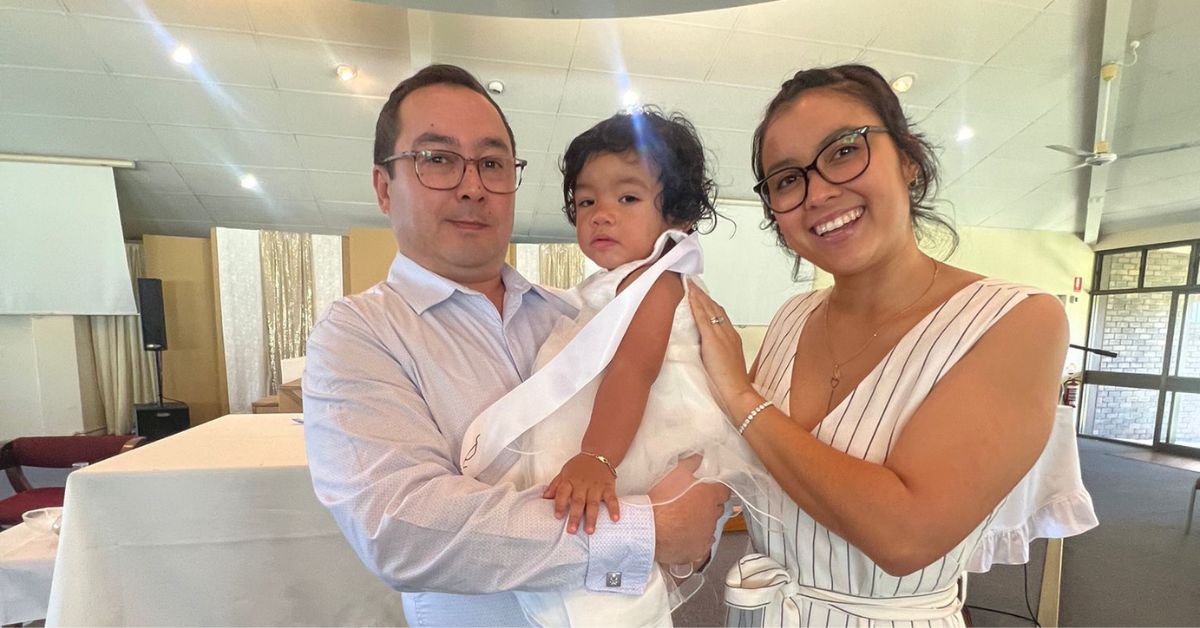
When Capalaba mother-of-two Jasmine Papalii lost her brother Jean-René Lebet suddenly in 2024, she found unexpected comfort in knowing his decision to donate his organs and tissues gave multiple strangers a second chance at life.
Jean-René Lebet was 38 years old when he suffered a ruptured brain aneurysm and was found unconscious at home. Despite undergoing brain surgery, he passed away four days later. In the aftermath of his death, his family learned that he had been able to donate his heart, parts of his pancreas and liver, skin tissue and eye tissue, helping an extraordinary number of people through a single act of generosity.
For Jasmine, the knowledge that her brother’s heart continues to beat inside someone else carries a particular resonance. Her eldest daughter had open-heart surgery at just three months old for a heart condition, and the connection between her brother’s heart donation and her daughter’s own experience made his gift feel deeply personal. She described the realisation as bringing the family tremendous joy in the middle of profound grief, and reflected that there are people alive today who would not be without him.
A Brother Who Gave Everything
By Jasmine’s account, Jean-René was the kind of person who would have given anything to help someone in need. She remembered him as warm, sarcastic, fiercely funny and endlessly generous, the kind of uncle her eldest daughter adored and called “funny uncle.” The pair exchanged TikToks constantly, and his humour and intelligence left a mark on everyone around him.
When Jasmine discovered she was pregnant shortly before his death, Jean-René was the first person she told. After he passed away, she named her second daughter Jean as a middle name in his honour, a quiet and lasting tribute to the bond they shared. As the only two siblings in their family, the closeness between Jasmine and her brother made his loss all the more profound, and his legacy through organ donation all the more meaningful.
Jasmine described her brother’s ability to help so many people as something he himself would have found extraordinary. She reflected that he would have been overjoyed to know the reach of his generosity, because giving to others was simply who he was.
Organ Donation Rates and a Push for Change
Jean-René’s story comes at a moment when organ donation is drawing renewed attention across Queensland and nationally. New data released by DonateLife in early 2026 shows that only around 35 per cent of eligible Australians are currently registered organ donors, with new registrations down 15 per cent on the previous year. Queensland’s registration rate sits at just 30 per cent of eligible residents.
By contrast, South Australia, the only state where residents can still register as organ donors when applying for a driver’s licence, has a registration rate of 74 per cent among those aged 16 and over. The gap between South Australia and every other state has prompted a broader conversation about whether reintroducing the option on driver’s licence applications could help close the shortfall nationally.
Queensland health authorities are currently in discussions about whether to reinstate organ donor registration on driver’s licence applications, a practice that was once common across multiple states before electronic registers were introduced. DonateLife has noted that a consent rate of 60 per cent, compared to the current 53 per cent, would have delivered an additional 200 life-saving transplants in 2025 alone.
Jasmine herself described the reinstatement of driver’s licence registration as something she considers vitally important, a view shaped directly by her family’s experience of what organ donation can mean for both the donor’s family and the lives saved.
Why This Matters to the Capalaba Community
For families across Capalaba and the broader Redlands area, Jean-René’s story is a reminder that organ donation is not a distant or abstract concept. It is a decision that ordinary people make, or do not make, and one that has consequences that ripple out far beyond the individual. Every registered donor represents potential for multiple lives to be saved or transformed, and every family that navigates sudden loss, as Jasmine’s did, faces the same crossroads.
With Queensland’s registration rate among the lowest in the country, there is real scope for local communities to make a difference simply by registering. Talking with family members about donation wishes is equally important. Even a registered donor’s decision can be overturned by family members who are unaware of their loved one’s intentions, which is why the conversation matters as much as the registration itself.
Capalaba residents can register as organ and tissue donors at donatelife.gov.au. Registration takes only a few minutes and can be updated or changed at any time. Sharing your decision with family members ensures your wishes are known and respected.
Published 16-March-2026.
Featured Image Credit: Queensland Health