




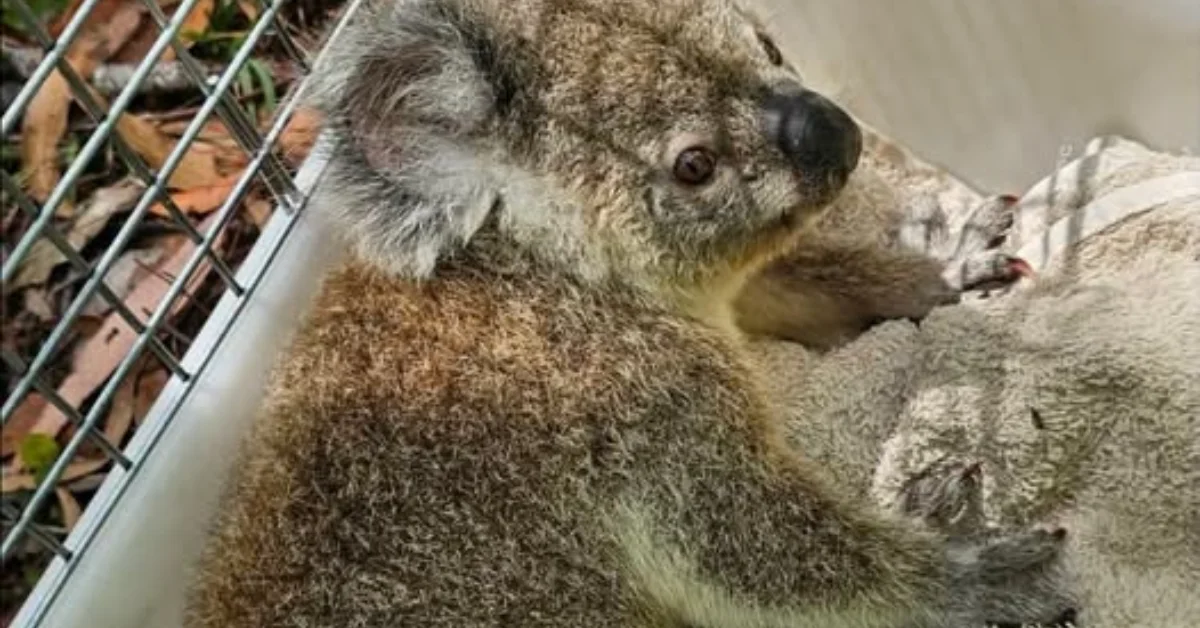
Delilah’s path from rescue to release has brought her into the Burbank koala program, where volunteer rescuers, carers and researchers are contributing to efforts to support the area’s declining koala population.
The young koala is now being monitored after her relocation to the Brisbane Koala Bushlands at Burbank, marking the latest stage of a journey that began months earlier at Whites Hill Reserve.
Volunteers Begin Delilah’s Journey
In January, Koala Rescue Brisbane South volunteers responded after a caller reported a small koala in a tree along the Bloodwood Track inside Whites Hill Reserve.
Her mother could not be found, so Delilah was taken to the RSPCA for a health check. She was considered too small to thrive independently and was placed in the care of Angela from Queensland Koala Society.
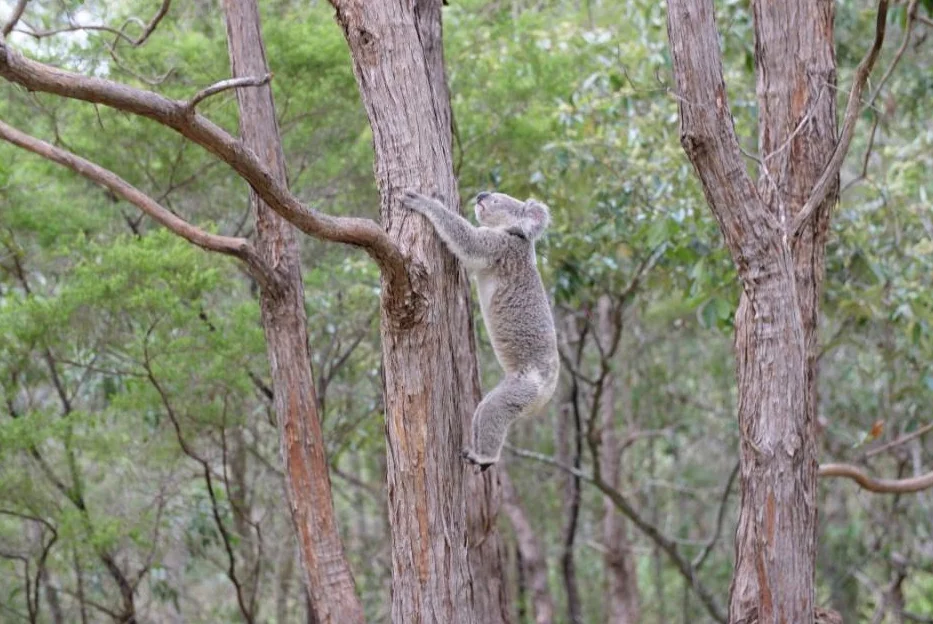
For the next six months, Delilah received round-the-clock care before being relocated to Burbank and released into the wild. Her carer was present when she returned to the bush.
The sequence brought together a member of the public who reported the koala, volunteer rescuers, wildlife care organisations and researchers. Delilah is now part of a University of Queensland monitoring program, with her movements being followed after her release.
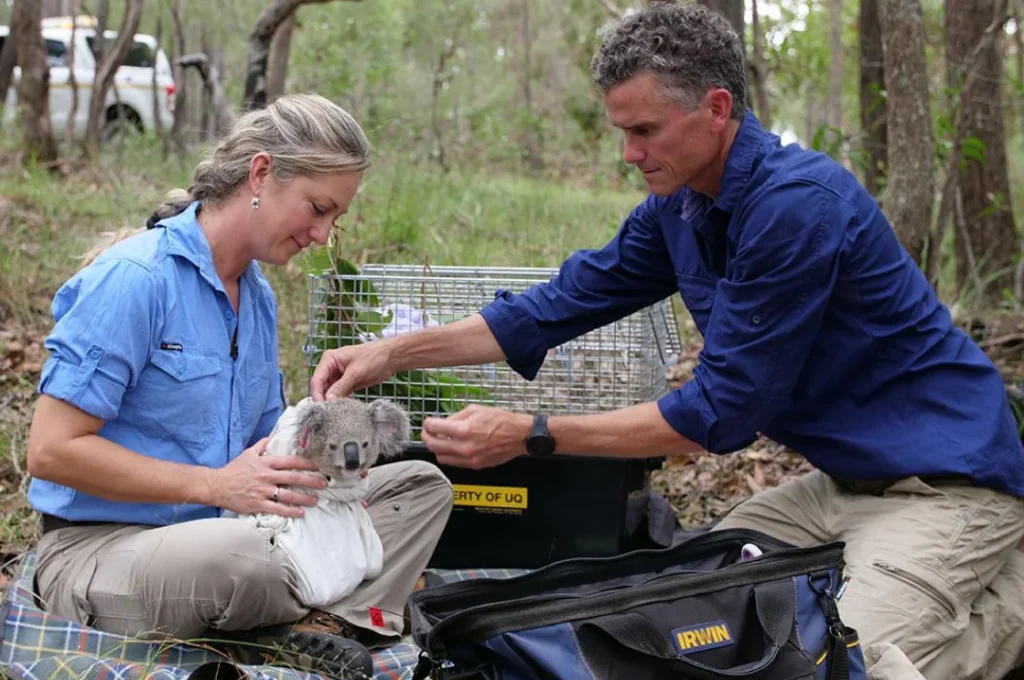
Photo Credit: The University of Queensland
Technology Supports Burbank Koala Program
At Burbank, researchers are combining fieldwork with thermal-imaging drones and lightweight tracking collars as they monitor koalas and address population decline in the bushland.
Thermal drones are used to locate animals, particularly during early-morning surveys when koalas’ body heat can be distinguished more clearly from the cooler surrounding forest.
The technology allows researchers to find multiple koalas in a day. Earlier methods included searching at night for eye shine and walking through bushland while scanning trees from the ground.
Once koalas are released, tracking collars provide researchers with ongoing location information. The solar-powered devices weigh about 20 grams and send data to a mobile phone around four times a day.
Movement information can alert the research team when an animal may be sick or injured, allowing it to be located and assessed sooner. The system has previously helped researchers reach sick koalas requiring intervention.
Veterinary Care Comes Into The Bushland
Health monitoring is another part of the work at Burbank, where chlamydia has been identified as the biggest threat to the local koala population.
Koalas found through the program are briefly anaesthetised for examination and treatment. Their condition is assessed before researchers determine whether they can be released or need further care.
A retrofitted caravan serves as a mobile veterinary clinic, allowing blood testing, microscopic examinations and other assessments to be carried out at the site. Conducting those checks in the field reduces the need to transport animals unnecessarily and limits the impact on wildlife hospitals.
The wider program brings together University of Queensland researchers, Brisbane City Council, the Queensland Government, wildlife rescue groups and animal hospitals.
Young Koalas Join Burbank Population
Delilah is among young koalas being introduced to the Burbank bushland as part of efforts to supplement the existing population.
Young rescued koalas can be sub-adults searching for new habitat, placing them at risk when they cross roads or encounter backyards, dogs and swimming pools.
The Burbank work combines the relocation of suitable young animals with treatment of sick koalas and the introduction of healthy animals for breeding.
After 18 months of the program, two joeys had been born.
Published 30-July-2026